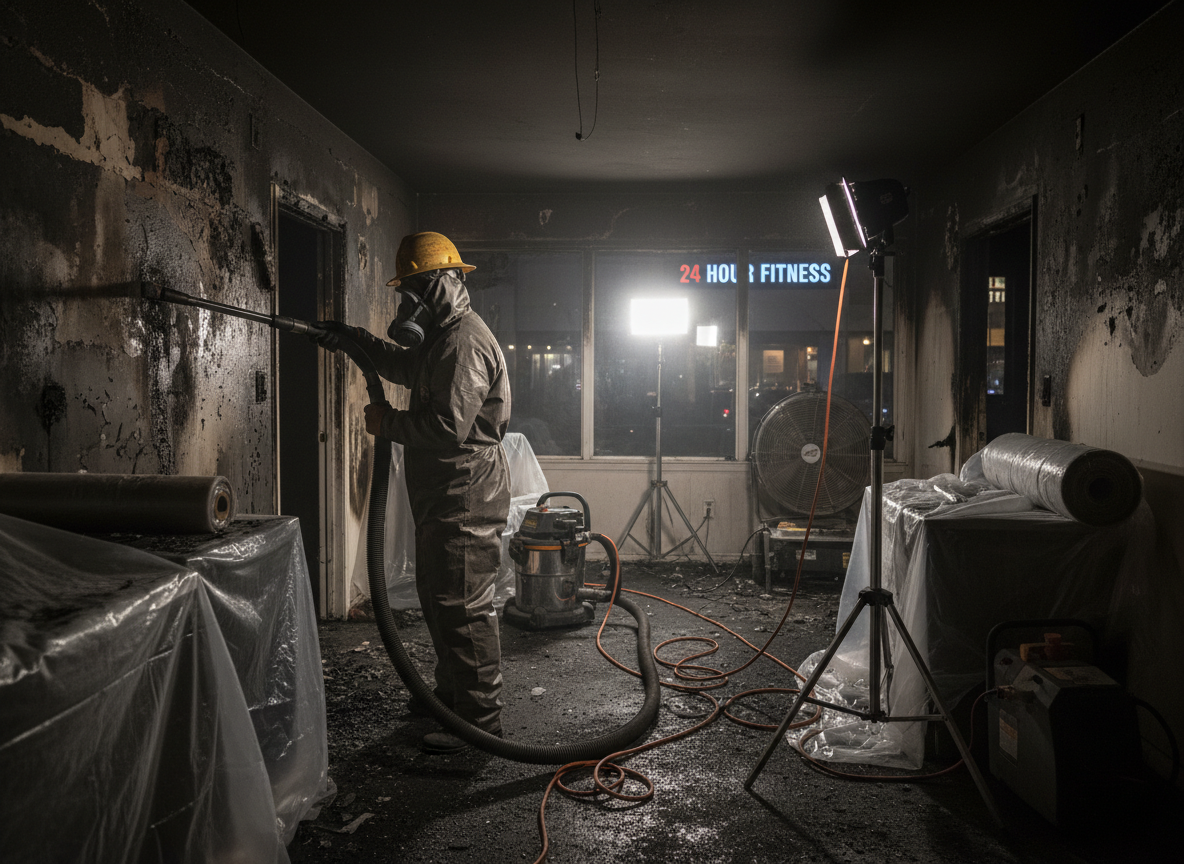
Studio City sits in a Mediterranean climate with warm dry summers that extend fire risk well into fall. Older single-family homes built from the 1940s through 1960s along Ventura Boulevard and the hills toward Laurel Canyon often feature lath-and-plaster walls, knob-and-tube wiring, and cedar shake roofs. When fire breaks out, these materials release heavy soot that penetrates HVAC systems and travels through the LA River corridor into Burbank and North Hollywood. Rapid 24 hour fire restoration focuses first on shutting down HVAC to prevent further distribution, then on documenting every layer of char before any demolition begins.
Hillside properties in Laurel Canyon present unique access challenges. Narrow roads and steep driveways slow equipment arrival, so crews stage containment tarps and negative-air machines at street level before hiking gear uphill. Summer low humidity leaves wood framing extremely dry, allowing fire to travel farther behind walls than in coastal neighborhoods. Restoration teams must open more cavities than code minimums require to locate hidden ember pockets, then treat remaining framing with borate solutions before any new insulation or drywall goes in.
Los Angeles County building codes now mandate updated electrical grounding and smoke-detector placement after any fire repair. Crews coordinate with inspectors early so temporary power can be restored without repeated visits. In Sherman Oaks and North Hollywood ranches, slab-on-grade construction means soot often settles into carpet pads and subfloor seams; these must be removed and the concrete etched before new flooring. Owners who delay 24 hour fire restoration notice secondary water damage once fire-suppression lines are shut off, turning a smoke job into a larger mold remediation project.
Immediate board-up and weatherproofing protect against the dry Santa Ana winds that can re-ignite embers days later. Documentation photos and inventory lists are shared daily with insurance adjusters so scope changes are caught before work stops. Final clearance testing checks for VOCs and particulates rather than relying on visual inspection alone, especially important in homes near Universal Studios Hollywood where air quality complaints are common.
Technician insight
In Studio City the thing that catches most people out with 24 hour fire restoration is how the dry summer air lets soot travel through the open floor plans common in Laurel Canyon homes. One kitchen fire can coat every surface in the living room and upstairs bedrooms before crews arrive because there are so few interior doors. Homeowners who open windows to air the place out only pull more soot in from the hills.
Kitchen Fire in 1950s Ranch Near Moorpark Street
A cooking fire spread through the range hood into the attic space of a single-story home in Studio City. Crews found ember trails running along the original rafters toward the front porch. They opened the ceiling in three rooms, removed the charred insulation, treated the framing, and rebuilt with new drywall and updated smoke detectors before the owner returned.
How it works
- 1
Emergency Site Assessment
Technicians arrive within hours, evaluate structural safety, document all affected rooms, and secure the property against further weather or trespass.
- 2
Containment and HVAC Shutdown
Plastic barriers and negative-air machines isolate damaged zones while HVAC is turned off to stop soot migration into clean areas of the home.
- 3
Soot and Debris Removal
HEPA vacuums, chemical sponges, and controlled demolition remove charred materials and surface soot without spreading particles to unaffected rooms.
- 4
Odor Neutralization and Drying
Ozone or hydroxyl generators treat remaining smoke odor while dehumidifiers and air movers dry any water introduced during suppression.
- 5
Rebuild and Final Clearance
Repairs follow Los Angeles County code updates, followed by third-party air testing before the home is returned to the owner.
Pricing
Upfront assessment provided before any work; final cost depends on square footage affected, number of rooms requiring cavity access, and whether hidden ember damage extends into framing.