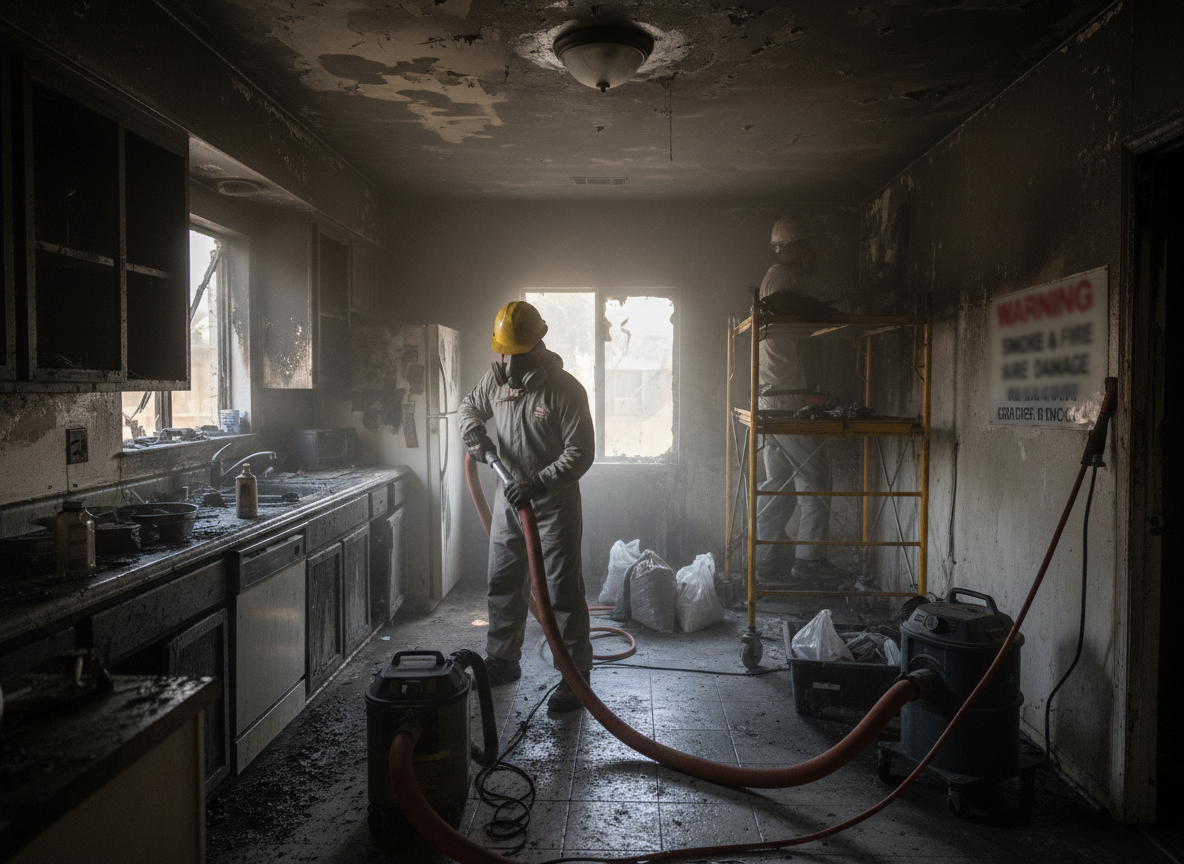
Studio City housing stock includes many mid-century wood-frame homes and stucco structures built before modern fire codes, where smoke travels through plaster lath walls and under redwood decks common in Laurel Canyon. Warm dry summers reduce humidity so ash stays airborne longer and settles into HVAC ducts and attic insulation near the LA River corridor. Technicians must separate oily soot from protein-based residue on surfaces while protecting original hardwood floors that absorb odors quickly in Burbank and Sherman Oaks border properties.
Edge cases arise when fires start in hillside homes above Universal Studios Hollywood where steep terrain limits equipment access and embers travel downslope into North Hollywood yards. Mediterranean climate patterns mean summer winds can push smoke into neighboring Sherman Oaks residences even when the original burn is contained. Crews test for hidden moisture from suppression water that can trigger mold in older crawl spaces once temperatures rise again after the dry season.
Code considerations in Los Angeles County require proper disposal of contaminated materials and documentation of residue levels before reoccupancy. Skipping negative air filtration during clean up leaves microscopic particles that reactivate odors when the next Santa Ana wind event hits. Homeowners often overlook attic insulation replacement, allowing soot to recirculate through the same ducts that served the original structure.
Technician insight
In Studio City the thing that catches most people out with fire damage clean up is how quickly the fine ash from dry summer fires works its way into the original plaster and lathe in 1950s homes near the LA River. Homeowners try wiping surfaces themselves and drive the soot deeper into the texture before we arrive.
Laurel Canyon Home Smoke Intrusion
A kitchen fire in a hillside Laurel Canyon residence sent smoke through shared attic space into two neighboring Studio City homes. We found oily residue coating original redwood beams and settled in the HVAC returns. Negative air and dry ice blasting cleared the soot without damaging the mid-century finishes, and clearance testing allowed families back inside within four days.
How it works
- 1
Initial Assessment
Technicians arrive from the Ventura Boulevard location and document visible soot patterns, test surfaces for residue type, and map smoke migration paths through the specific floor plan.
- 2
Containment Setup
Plastic barriers and negative air machines isolate affected rooms to prevent cross-contamination into unaffected areas common in open-plan Studio City homes.
- 3
Residue Removal
HEPA vacuums, chemical sponges, and dry ice blasting lift soot from textured ceilings, wood cabinetry, and HVAC components without spreading fine ash.
- 4
Odor Neutralization
Thermal fogging and ozone treatments address smoke trapped in porous materials like carpet padding and drywall in older North Hollywood-adjacent properties.
- 5
Final Clearance
Air quality readings and surface wipe tests confirm levels meet Los Angeles County reoccupancy standards before contents are returned.
Pricing
Cost depends on square footage affected, residue type, and whether HVAC or attic insulation requires replacement.