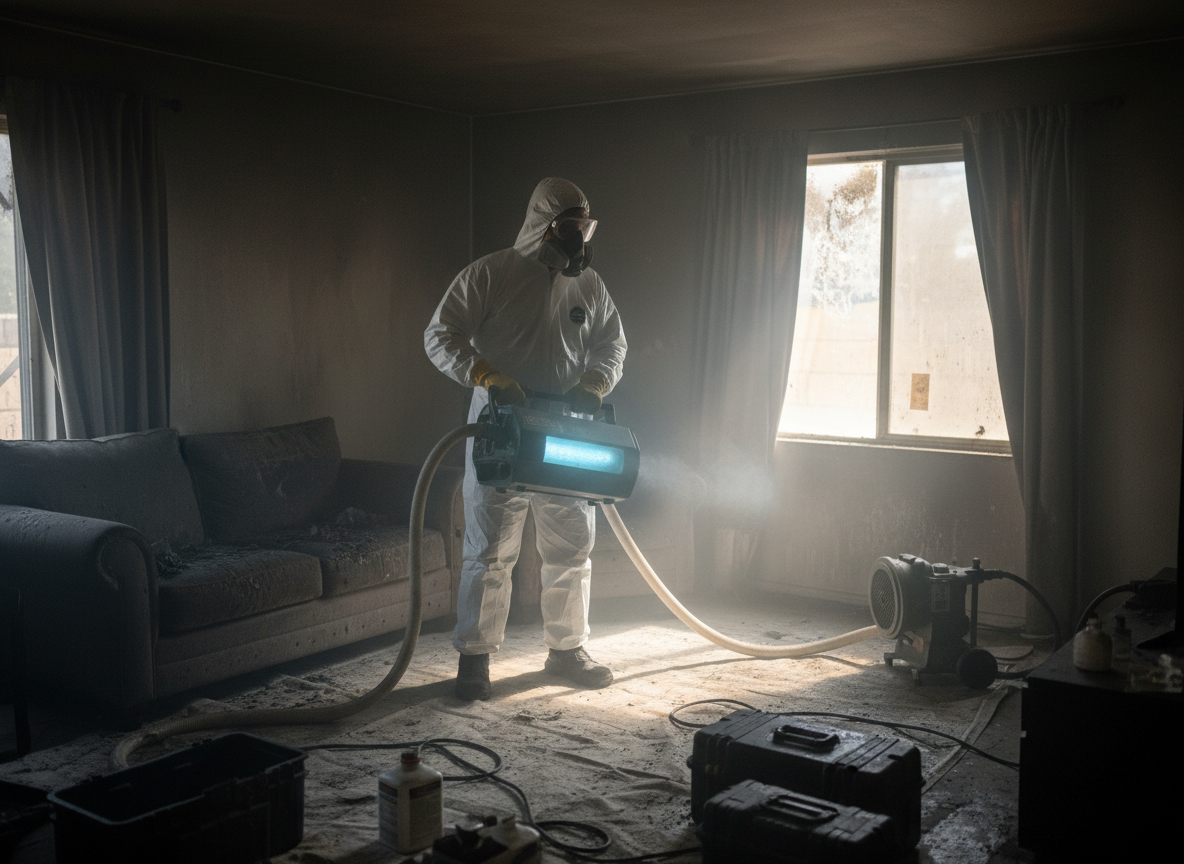
Smoke from structure fires penetrates porous materials like drywall, insulation, and hardwood floors common in Studio City homes built before the 1970s. In the area's Mediterranean climate with warm dry summers, low humidity allows odor molecules to bond deeply into surfaces without natural moisture to dilute them. Restoration crews must use thermal fogging and hydroxyl generators rather than simple air scrubbers because residual smoke from fires near the LA River often travels through shared walls in multi-unit buildings. Incomplete neutralization leaves residents dealing with recurring smells months later when Santa Ana winds increase.
Edge cases arise in Laurel Canyon properties where steep terrain and older ventilation systems trap soot in attics and crawl spaces. Standard ozone treatments can damage electronics and fabrics if not calibrated for the tight spaces found in North Hollywood-adjacent homes. Technicians test pH levels on concrete slabs and remove affected subflooring when alkaline residues from burned synthetics remain. Local building codes in Los Angeles County require documentation of all removed materials to avoid disputes during insurance claims for properties near Universal Studios Hollywood.
Dry summer conditions accelerate the oxidation of smoke residues, turning initially mild odors into persistent, sharp smells that migrate into clothing and HVAC systems. Crews seal off zones with plastic sheeting before applying encapsulants rated for porous substrates. Homeowners in Sherman Oaks and Burbank often overlook the need to clean behind baseboards and inside light fixtures, allowing odors to reappear during the first rain after a fire. Professional teams use air sampling before and after treatment to confirm removal rather than relying on scent alone.
Technician insight
In Studio City, the thing that catches most people out with odor removal after fire is how the dry summer winds push smoke into the unsealed attics of 1950s stucco homes along Laurel Canyon, then it settles into insulation that standard cleaning never reaches.
Smoke Odor Lingering in Laurel Canyon Home
A kitchen fire in a 1960s Studio City residence sent smoke through shared ductwork into upstairs bedrooms. Inspection revealed soot lodged in fiberglass insulation near the LA River corridor. Crews removed the insulation, treated the cavities with encapsulant, and ran hydroxyl units for three days. Odors cleared and testing showed no residual VOCs.
How it works
- 1
Initial Assessment
Inspect all affected rooms, attics, and HVAC systems in the Studio City property to map smoke migration paths created by the dry climate.
- 2
Source Removal
Extract charred materials and soot from porous surfaces before applying any odor counteractants.
- 3
Neutralization Treatment
Deploy thermal fogging and hydroxyl equipment calibrated for older Los Angeles County housing stock.
- 4
Verification and Clearance
Conduct air quality testing and re-inspect after 48 hours to confirm odors have not returned.
Pricing
Pricing varies by square footage, depth of smoke penetration, and whether HVAC cleaning is required.