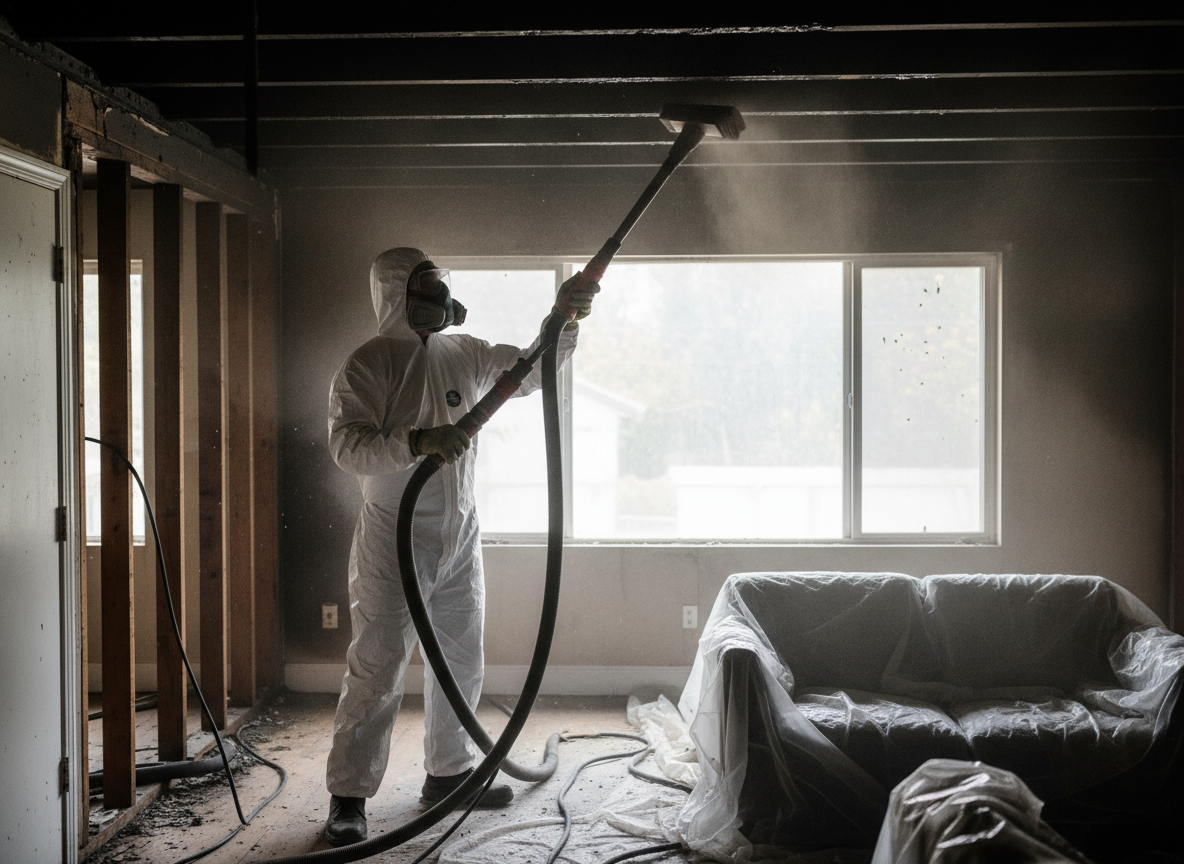
Soot from structure fires in Studio City travels far in the warm dry summers common to Los Angeles County. Fine carbon particles embed in porous materials like plaster, aged hardwood floors, and attic insulation found in many Laurel Canyon homes. Standard vacuuming fails because the particles are smaller than standard HEPA filters catch without proper agitation and negative-air containment.
Near the LA River and in North Hollywood bungalows, soot often mixes with dust from older HVAC systems, creating a sticky residue on metal ductwork. We use pH-neutral cleaners on drywall and masonry while avoiding moisture that could trigger mold during the dry season. Burbank and Sherman Oaks commercial buildings require extra attention to drop ceilings where soot hides above tiles.
LA County building codes require documentation of containment during soot work to prevent cross-contamination to adjacent units. We isolate zones with plastic sheeting and air scrubbers rated for 0.3 micron particles before any surface cleaning begins. Homeowners in hillside areas must also consider how wind patterns during Santa Ana conditions can re-deposit soot after initial cleaning.
Handling Hidden Soot in Attics and Crawlspaces
Studio City homes built before 1970 frequently have knob-and-tube wiring in attics where soot settles on cellulose insulation. Removing the insulation entirely is often required rather than surface cleaning. We coordinate with electrical contractors to avoid disturbing live circuits during extraction.
Technician insight
In Studio City, the thing that catches most people out with Soot removal is how the dry Mediterranean summers let fine particles travel through the open floor plans of Laurel Canyon homes and settle into the unsealed stucco walls that are common here.
Soot in a 1960s Laurel Canyon Residence
A kitchen fire sent soot through the return vents of a hillside home. We found heavy accumulation in the attic insulation and on exposed rafters. After full containment and HEPA extraction we removed the contaminated insulation and cleaned the ductwork, restoring the home without odor recurrence.
How it works
- 1
Initial Assessment
Walk the property to map soot migration paths through HVAC returns and shared walls common in Studio City multi-unit buildings.
- 2
Containment Setup
Install negative pressure zones and floor-to-ceiling barriers to keep particles from moving into unaffected rooms near Universal Studios Hollywood traffic corridors.
- 3
Particle Removal
Agitate and HEPA-vacuum surfaces starting from the highest point, working downward through the dry summer air that keeps particles airborne longer.
- 4
Surface Cleaning
Apply appropriate cleaners to porous and non-porous materials while monitoring humidity to prevent secondary damage in the warm climate.
- 5
Final Verification
Use white glove and air quality testing to confirm no visible or microscopic residue remains before reoccupancy.
Pricing
Cost depends on square footage affected, material porosity, and whether attic or duct cleaning is required; we provide upfront quotes after on-site assessment.