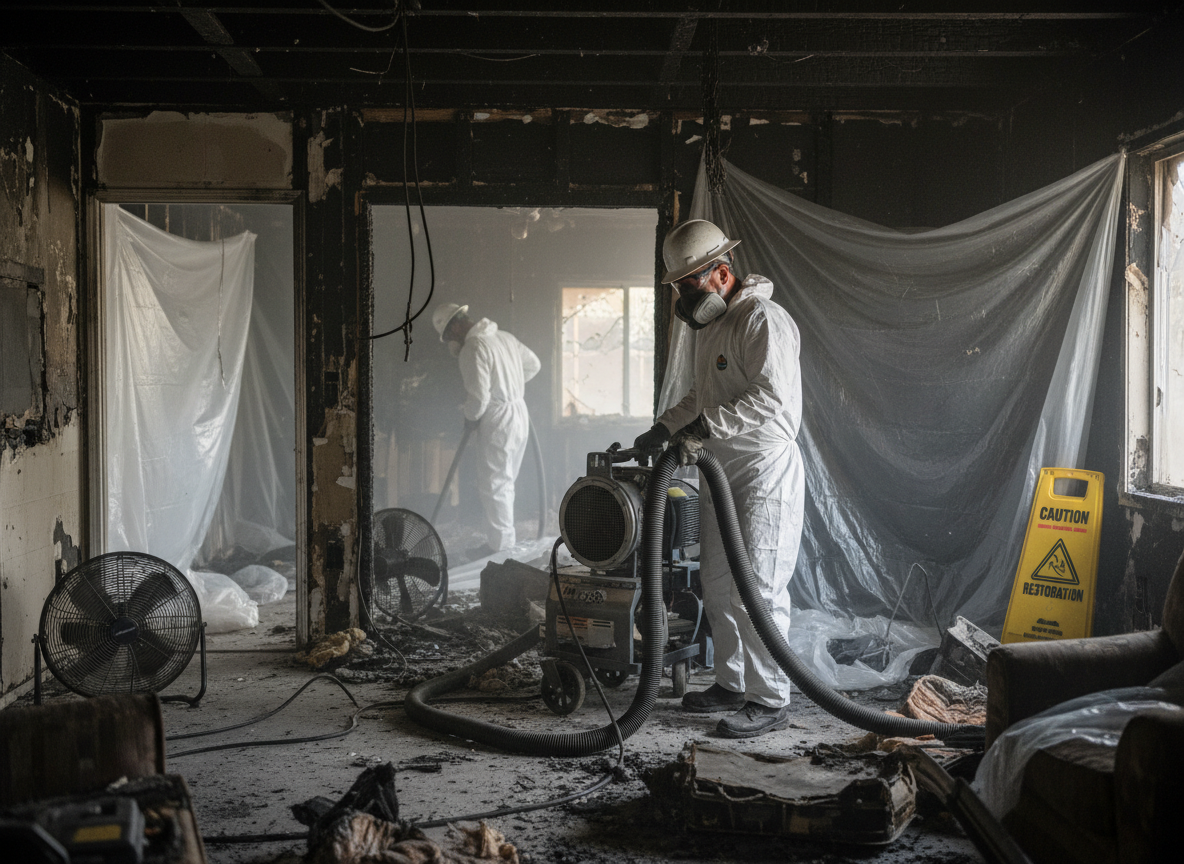
Studio City homes built from the 1940s through the 1970s often feature lath-and-plaster walls and older electrical systems that complicate smoke migration after a fire. Warm dry summers typical of the Mediterranean climate here let embers travel farther across Laurel Canyon slopes, pushing soot into HVAC ducts and under floorboards that newer builds rarely have. Restoration crews must pull baseboards and test for hidden char before ozone or thermal fogging, because residual smoke in these older cavities will reappear once the first Santa Ana winds return.
Los Angeles County code requires permits for any structural repair exceeding cosmetic work, and crews working near the LA River must also account for higher humidity pockets that slow drying of subfloors. In neighborhoods bordering Burbank and North Hollywood, shared walls in duplexes mean smoke travels vertically through common chases, so sealing one unit without addressing the other creates callbacks weeks later. Technicians carry portable negative-air machines sized for these tight lots because street access on Ventura Boulevard limits full-size equipment.
Sherman Oaks hillside properties add another variable: steep driveways and limited parking mean equipment staging happens on the street, extending the initial assessment by several hours. After any fire, even small ones near Universal Studios Hollywood, crews document every layer removed for insurance adjusters who know the area’s older stock. Skipping the step of HEPA vacuuming before sealing leaves microscopic particles that later off-gas when summer heat returns.
Homeowners sometimes attempt to clean visible soot with household degreasers, which sets the residue into porous materials like brick fireplaces common in Studio City. Professional removal uses pH-neutral agents matched to the surface, followed by moisture readings to confirm no water was introduced during suppression that could later support mold in the dry climate.
Technician insight
In Studio City the thing that catches most people out with emergency fire damage restoration is how quickly smoke travels through the original plaster-and-lath walls of 1950s homes once the dry summer air pulls it upward; homeowners think wiping visible surfaces is enough, but without pulling baseboards and treating the cavities the odor returns the first time the heat kicks on.
Laurel Canyon Smoke Migration
A kitchen fire in a 1962 Studio City house sent smoke through shared wall cavities into the upstairs bedrooms. Inspection showed soot inside HVAC returns and under original hardwood floors. Crews removed baseboards, cleaned ducts, and ran negative air for four days until readings cleared. The family moved back without lingering odor even after the next warm spell.
How it works
- 1
Secure The Site
Board windows and doors at the Studio City address to prevent further entry while crews assess structural safety.
- 2
Remove Debris And Contents
Pack out salvageable items and haul charred debris to permitted Los Angeles County facilities before odors set into remaining surfaces.
- 3
Clean And Deodorize
Apply industry cleaners to walls, ceilings and ducts, then use air scrubbers and thermal fogging to neutralize smoke throughout the property.
- 4
Dry And Monitor
Place drying equipment and log moisture readings daily until levels return to normal for the Mediterranean climate zone.
- 5
Final Walkthrough
Review every room with the homeowner and document completion before any reconstruction begins.
Pricing
Upfront quotes based on visible damage and square footage; final cost depends on hidden char and required permits.