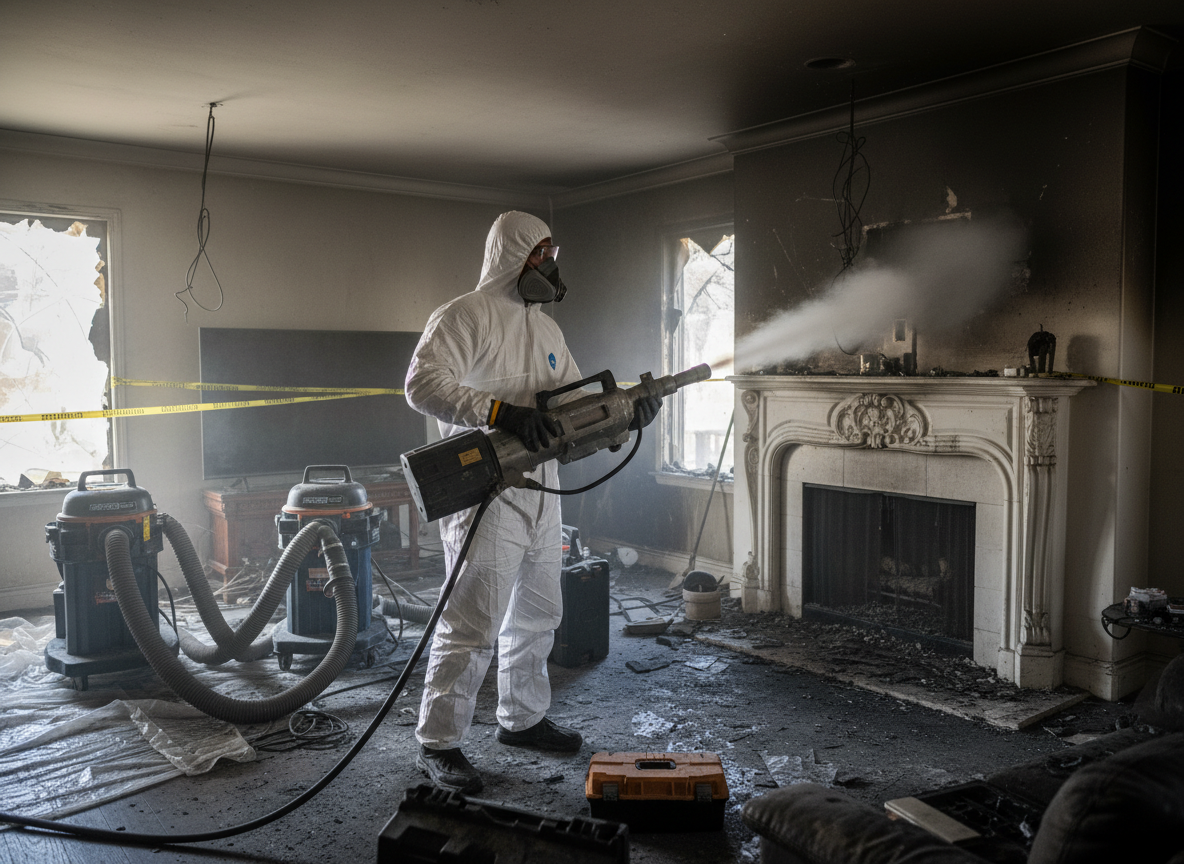
Studio City properties, especially those built mid-century near Laurel Canyon and close to the LA River, often feature plaster walls, stucco exteriors and shared HVAC systems that allow smoke to travel far beyond the fire origin. Warm dry summers accelerate soot adhesion to porous surfaces, making standard wiping ineffective and risking long-term odor re-release once humidity rises in fall. Technicians must map airflow paths through attics and wall cavities common in these neighborhoods to prevent cross-contamination into adjacent rooms or neighboring units in denser blocks near Universal Studios Hollywood.
Smoke remediation here differs from newer tract homes in Sherman Oaks or North Hollywood because older electrical and plumbing penetrations create hidden migration routes. Soot bonds chemically with alkaline stucco and aged wood framing, requiring pH-neutral cleaners and HEPA vacuuming followed by thermal fogging or hydroxyl treatment rather than ozone alone. Failure to address subflooring or insulation in crawl spaces typical of Burbank-adjacent bungalows leads to recurring smells when temperatures swing.
Los Angeles County air-quality rules and local fire codes require documentation of particle counts before and after work, particularly when smoke has entered commercial spaces near Ventura Boulevard. Crews isolate zones with negative air machines to protect unaffected areas, then clean or replace HVAC filters and duct liners that trap fine particulates in the dry climate. Final verification includes odor testing and surface sampling to confirm no residue remains that could affect resale or tenant health.
Technician insight
In Studio City, the thing that catches most people out with Smoke remediation is how the dry Mediterranean summers let soot bond deep into stucco and mid-century plaster walls in Laurel Canyon homes, so standard cleaning fails and odors return the first time fall humidity hits the LA River basin.
Smoke migration through shared HVAC in North Hollywood border home
Smoke from a kitchen fire traveled through an attic duct run into bedrooms of a 1950s bungalow near the Studio City line. Inspection revealed heavy soot inside wall cavities and insulation. Crews sealed the system, performed targeted cleaning and replaced affected duct sections, then verified clearance with particle counts before restoring airflow.
How it works
- 1
Site Assessment and Airflow Mapping
Technicians inspect all affected rooms, attics and HVAC runs in Studio City homes to trace smoke paths through older construction.
- 2
Containment and Negative Air Setup
Plastic barriers and HEPA air scrubbers isolate work zones to stop soot from spreading to unaffected areas or neighboring properties.
- 3
Soot Removal and Surface Cleaning
Specialized cleaners and vacuum equipment remove residue from plaster, stucco and wood without damaging finishes common in Laurel Canyon homes.
- 4
Odor Neutralization and Verification
Thermal or hydroxyl treatment eliminates embedded smells followed by particle testing to meet local standards.
Pricing
Cost depends on square footage affected, depth of soot penetration into older materials, and whether HVAC systems require full cleaning. Upfront quotes provided after inspection.