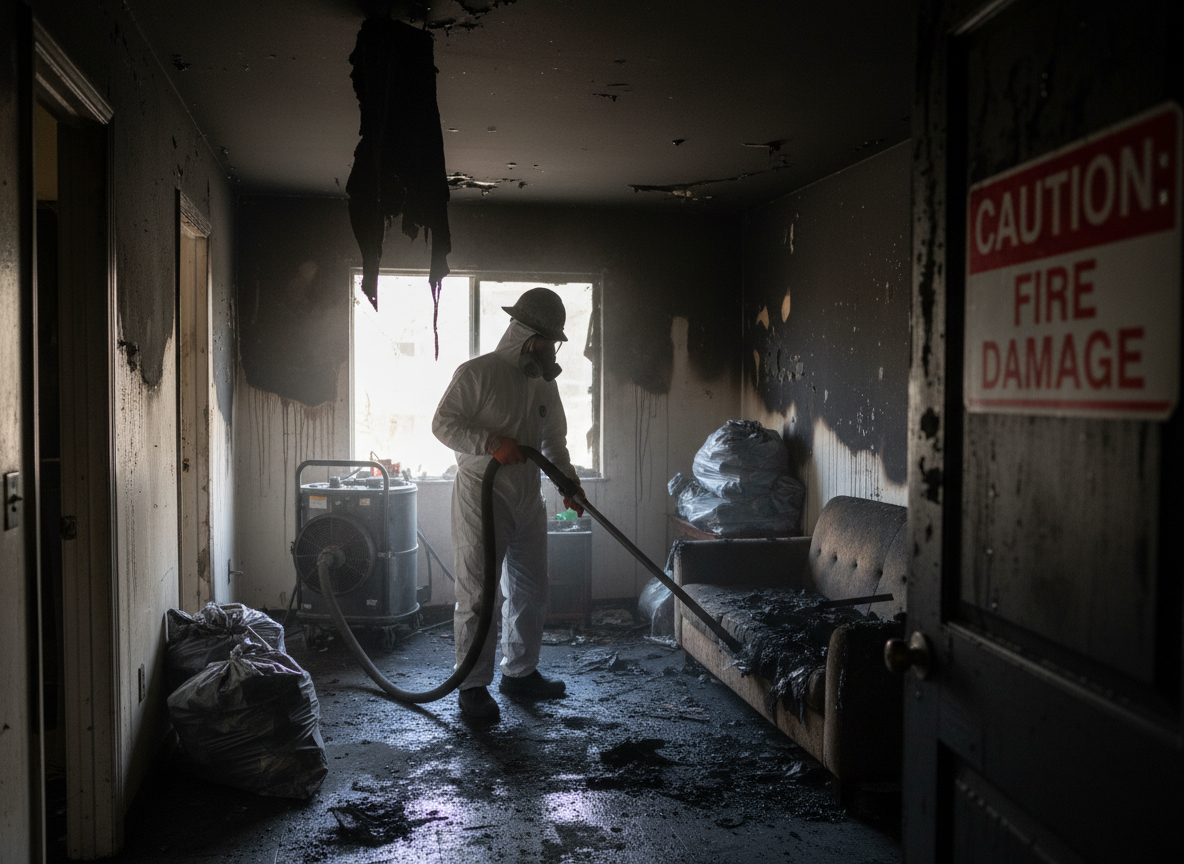
Studio City apartments often date to the 1950s and 1960s, with lath-and-plaster walls and shared HVAC runs that let smoke travel between units faster than in newer construction. After a fire, crews must isolate each unit’s ductwork and test for hidden soot behind baseboards and in attic spaces above the top floor. Warm dry summers common to the Mediterranean climate keep particulates airborne longer, so negative-air machines run longer to prevent re-soiling of carpet and upholstery.
Near Laurel Canyon and along the LA River corridor, older wood-frame buildings sit on sloped lots where ash can wash into lower units during rare summer sprinkles. Technicians bag and remove charred contents first, then use HEPA vacuums and alkaline sponges on hard surfaces before applying odor counteractants. Los Angeles County building codes require documentation of smoke migration paths before any drywall can be replaced, adding steps that single-family jobs rarely need.
Multi-unit fires frequently affect common areas such as hallways and laundry rooms, so containment barriers must stay in place until every affected apartment passes clearance testing. Residue from burned synthetics in kitchen fires bonds differently to tile grout than residue from wood fires, requiring separate cleaning protocols. Crews coordinate with property managers to schedule work around tenant relocations without triggering additional code violations.
Technician insight
In Studio City, the thing that catches most people out with Apartment fire cleanup is how quickly smoke travels through the shared laundry vents and attic spaces in 1960s buildings along Ventura Boulevard, especially when the warm dry summers leave every surface parched and ready to hold soot.
Smoke Through Shared Vents in a Laurel Canyon Apartment
A kitchen fire in a second-floor unit sent smoke into three neighboring apartments through a common exhaust chase. Inspection showed heavy soot on popcorn ceilings and inside HVAC registers. Crews sealed the chase, removed and cleaned registers, then treated all four units with odor counteractants before clearance testing allowed tenants back in.
How it works
- 1
Initial Assessment
Technicians inspect every affected unit, map smoke paths through shared vents, and document materials that require specialized cleaning.
- 2
Containment and Safety
Plastic barriers and negative-air machines isolate the work zone so soot does not migrate to unaffected apartments or common hallways.
- 3
Soot and Ash Removal
HEPA vacuums, dry sponges, and alkaline cleaners remove residue from walls, ceilings, and contents without spreading particles.
- 4
Odor Neutralization and Clearance
Thermal fogging and ozone treatments address embedded smoke odor, followed by air-quality testing before tenants return.
Pricing
Pricing varies by number of units affected, extent of smoke migration, and materials present; upfront quotes follow the site visit.