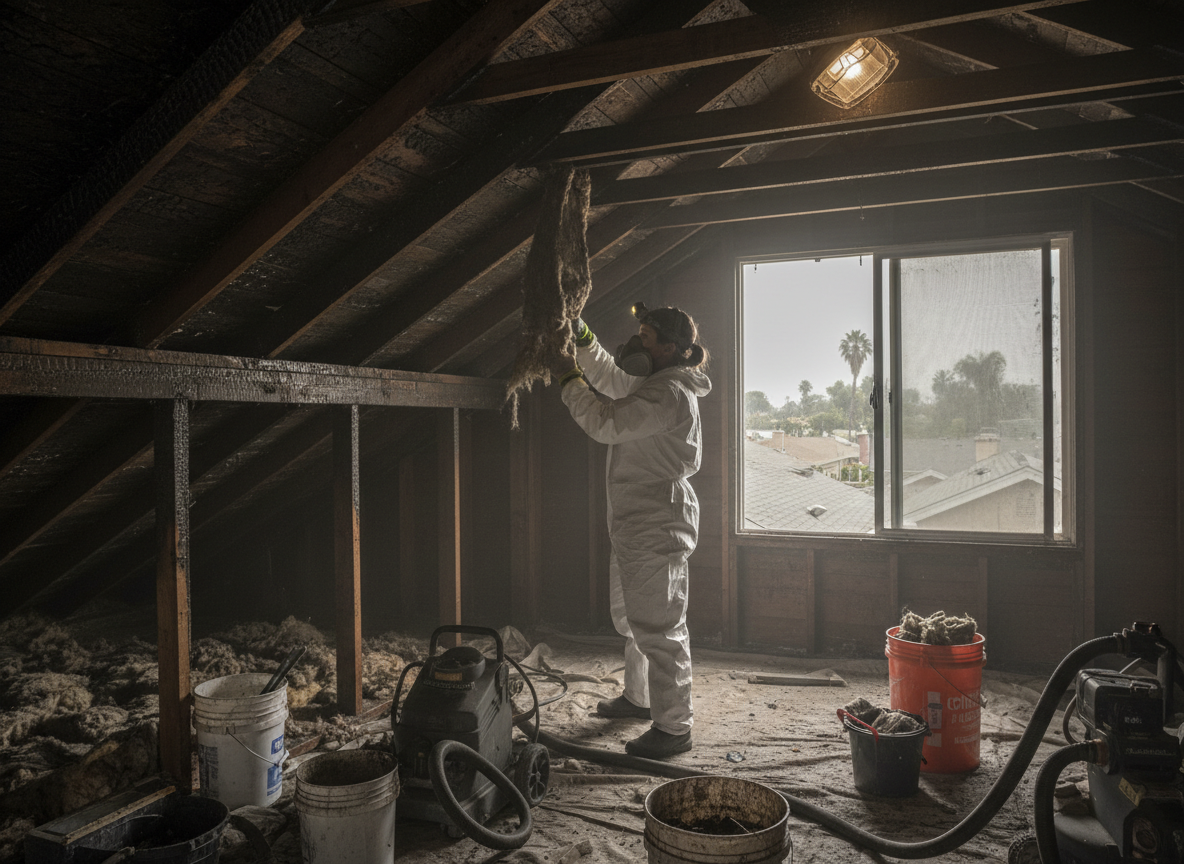
Studio City sits in a Mediterranean climate with warm dry summers that turn attic spaces into tinderboxes once embers travel from nearby hillsides. Older homes here often have original insulation and knob-and-tube wiring that ignite faster and leave deeper soot penetration than newer builds. Restoration crews must pull back drywall ceilings without disturbing load-bearing rafters that run parallel to the steep slopes above Laurel Canyon. Failure to address hidden char in these cavities leads to recurring odors months later when the first Santa Ana winds return.
Access in these neighborhoods is rarely straightforward. Many properties back up to the LA River or sit on narrow streets shared with Universal Studios Hollywood traffic, limiting equipment staging. Crews work around existing HVAC ducts that run through attics, sealing them before negative-air machines start so smoke does not migrate into living spaces in Burbank or Sherman Oaks homes. Insulation removal must follow Los Angeles County disposal rules for fire-damaged materials, and crews document every layer to satisfy insurance adjusters who know the area’s fire patterns.
Electrical and structural trades coordinate on the same day because knob-and-tube circuits are still present in many pre-1960 attics. Replacing charred joists requires sistering new lumber while preserving the original roof pitch that sheds water during rare winter rains. Final air scrubbing targets the fine soot that settles on rafters and travels into wall cavities when the dry summer heat expands the wood.
Technician insight
In Studio City, the thing that catches most people out with attic fire restoration is how the dry summers let embers travel under the original insulation and along knob-and-tube runs before anyone smells smoke downstairs. Hillside homes near Laurel Canyon often have limited staging space, so crews must stage equipment on Ventura Blvd and carry everything up narrow driveways.
Hidden Char in Laurel Canyon Attic
A homeowner in Studio City noticed a faint odor after a small brush fire near the LA River. Inspection revealed ember penetration under decades-old insulation along the rafters. Crews removed the insulation, sistered two charred joists, replaced wiring sections, and ran negative air for three days. The home passed final clearance with no recurring smoke smell during the next warm spell.
How it works
- 1
On-Site Assessment
Technicians arrive within hours, map smoke travel through attic vents, and test for hidden char in insulation and wiring common to Studio City homes.
- 2
Containment and Debris Removal
Plastic barriers isolate the attic from living areas while crews remove burned insulation and debris, following Los Angeles County disposal guidelines.
- 3
Structural and Electrical Repairs
Damaged rafters are sistered and knob-and-tube wiring is replaced before new insulation is installed to current code.
- 4
Odor Neutralization and Final Cleaning
HEPA air scrubbers and thermal fogging eliminate smoke residue that lingers in dry summer conditions.
Pricing
Pricing varies with attic access difficulty, amount of insulation to remove, and whether knob-and-tube wiring must be updated in older Studio City homes.