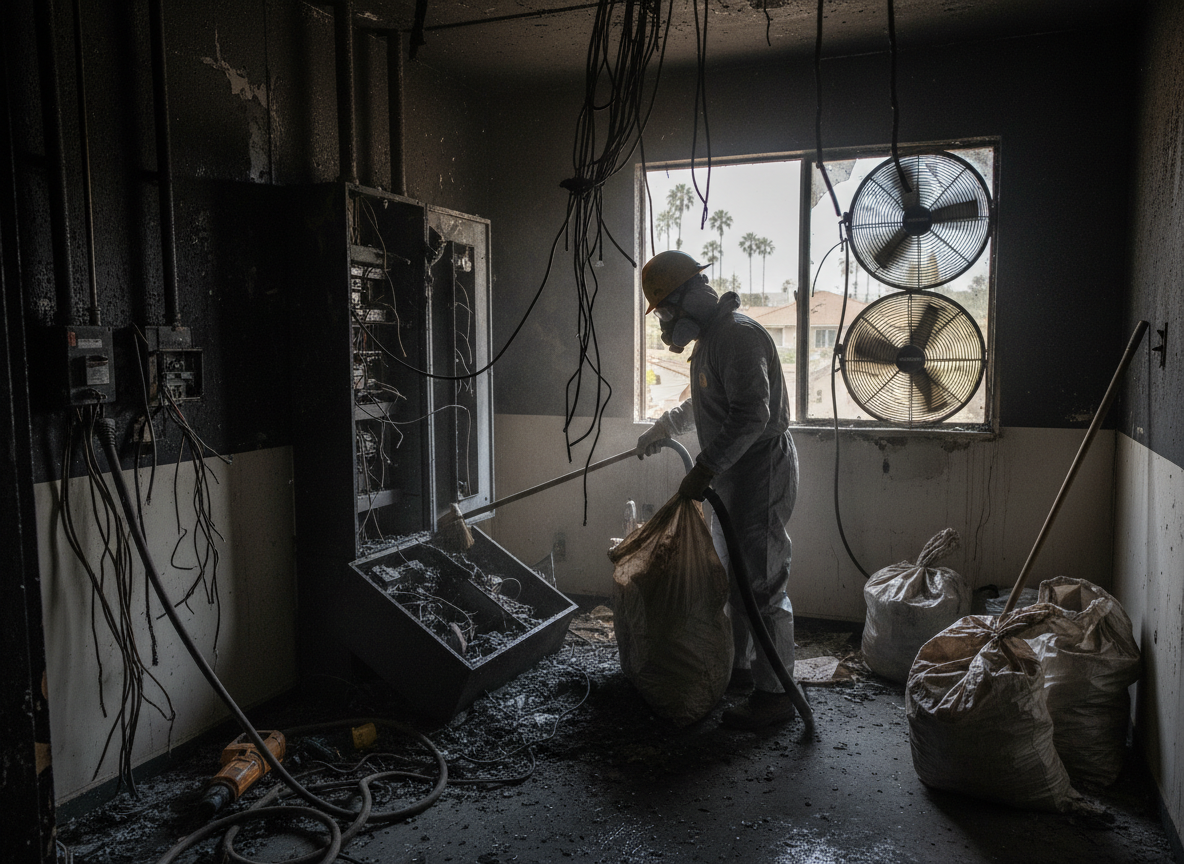
Studio City homes built in the 1940s through 1960s often contain original knob-and-tube or early aluminum wiring that fails during peak summer loads. Electrical fires here frequently start in attics or behind walls near HVAC units stressed by the Mediterranean climate's warm dry periods. Cleanup requires isolating charred circuits, removing soot from insulation, and coordinating with Los Angeles County electrical inspectors before any reconstruction begins. Residences near the LA River or on Laurel Canyon slopes add access challenges because of hillside grading and limited equipment staging.
Soot from electrical arcs bonds tightly to drywall and wood framing, releasing corrosive residues that corrode copper pipes and junction boxes if left untreated. Technicians must test every outlet and switch in affected rooms plus adjacent spaces because arc faults travel through shared stud bays common in North Hollywood and Sherman Oaks ranch layouts. Air scrubbing and HEPA vacuuming continue until surface pH readings return to neutral, preventing ongoing odor and corrosion issues that appear weeks later in Burbank-adjacent properties.
After power isolation, crews map the exact path of the fault using thermal imaging to locate hidden melting in Romex runs. All affected insulation, outlets, and switch boxes are removed rather than cleaned because carbon tracking makes reuse unsafe. Final clearance includes documentation for insurance and a walkthrough with the homeowner showing which circuits were replaced versus merely cleaned.
Seasonal Considerations
Dry summer months increase electrical demand on aging panels in Studio City, raising the chance of overload fires in homes without updated subpanels. Winter rains can then drive moisture into previously charred cavities, creating secondary mold risks that must be addressed during the same cleanup pass.
Technician insight
In Studio City, the thing that catches most people out with Electrical fire cleanup is how quickly soot migrates through the shared attic spaces of 1950s ranches, especially after a dry summer overloads the original 100-amp panels. Homeowners often think wiping visible surfaces is enough, but the carbon residue left in insulation keeps smelling and corroding copper for months if we don't open the cavities.
Attic wiring short in Laurel Canyon residence
A homeowner noticed flickering lights and a burning smell near the roofline after a warm stretch. Inspection found melted NM cable above the master bedroom caused by overloaded circuits feeding an older AC unit. We isolated the run, removed charred insulation and outlets across two rooms, neutralized surfaces, and documented the work for the insurance adjuster.
How it works
- 1
Power Isolation and Safety Assessment
Shut off affected circuits at the panel and verify zero voltage before entry. Inspect for ongoing arc risk and document the scene for insurance.
- 2
Soot and Char Mapping
Use thermal cameras and moisture meters to trace the full extent of damage through walls and ceilings common in mid-century Studio City construction.
- 3
Selective Demolition and Removal
Remove all charred insulation, outlets, and wiring runs showing carbon tracking while protecting unaffected areas.
- 4
HEPA Cleaning and Neutralization
Apply pH-neutral cleaners followed by negative-air scrubbing until surfaces test clean and odor-free.
- 5
Documentation and Turnover
Provide photos, circuit maps, and clearance notes for the homeowner and Los Angeles County permitting if rewiring is required.
Pricing
Cost depends on square footage affected, number of circuits involved, and whether hidden damage extends into multiple rooms or attic spaces.