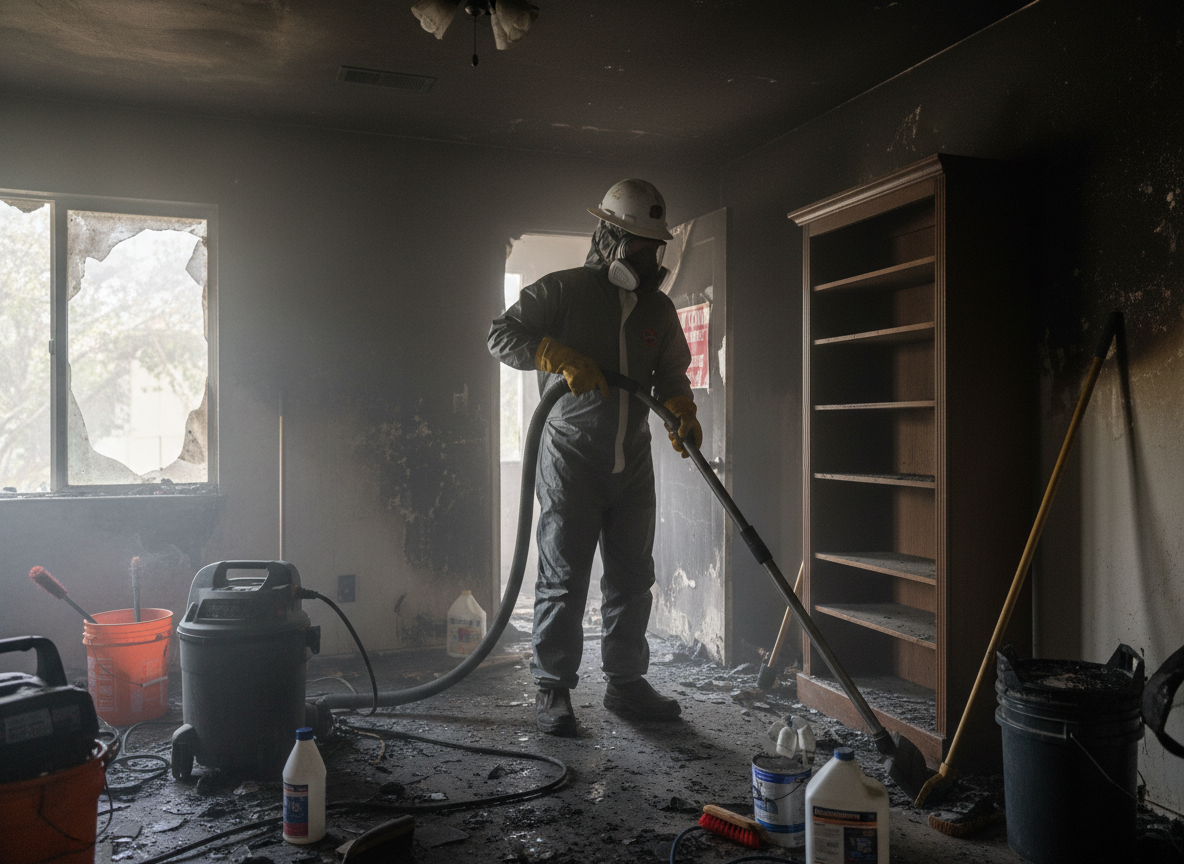
Studio City homes built in the 1950s and 1960s often feature lath-and-plaster walls and original HVAC systems that trap smoke particles deep in cavities. After a fire, these materials require targeted removal rather than surface cleaning because Mediterranean dry summers leave low humidity that lets soot travel farther through ductwork before settling. Technicians must also account for the slope of Laurel Canyon properties where embers can enter attic vents from uphill brush.
Los Angeles County building codes require documentation of all removed materials after smoke events, especially when work touches shared walls in hillside neighborhoods. Edge cases include smoke migrating across the LA River into North Hollywood structures or settling in the older single-wall construction common near Universal Studios Hollywood. Homeowners who attempt DIY cleaning with household fans often push particles deeper into insulation, raising the scope of later professional work.
Seasonal wind patterns in warm dry summers push smoke from regional fires into Burbank and Sherman Oaks corridors, creating odor issues even when the original fire occurred miles away. Restoration crews inspect for hidden moisture introduced during firefighting because residual water in crawl spaces can combine with soot to create acidic conditions that corrode copper wiring and metal duct joints.
Proper sequencing matters: containment before demolition prevents cross-contamination into unaffected rooms. In Studio City’s dense residential pockets, crews stage equipment on Ventura Boulevard access points to avoid blocking narrow canyon roads during multi-day projects.
Technician insight
In Studio City, the thing that catches most people out with fire and smoke damage restoration is how the dry summer air lets soot travel through the original plaster-and-lath walls and single-wall construction near the LA River, then reappear weeks later when humidity shifts.
Smoke Migration from Canyon Fire
Smoke from a brush fire above Laurel Canyon entered a mid-century Studio City home through attic vents. We found soot embedded in original insulation and HVAC ducts running under the living room. We sealed the structure, removed contaminated insulation, and performed staged cleaning and odor treatment. The family returned to a home free of residual smoke smell.
How it works
- 1
Initial Assessment
Technicians arrive within hours, document visible and hidden smoke paths through attics and wall cavities, and note any water introduced during suppression.
- 2
Containment and Safety Setup
Negative air machines and plastic barriers isolate affected zones to protect unaffected living spaces common in older Studio City layouts.
- 3
Soot Removal and Cleaning
HEPA vacuums, specialized sponges, and media blasting address residues on plaster, wood, and HVAC components without spreading particles.
- 4
Odor Neutralization and Final Verification
Thermal fogging and ozone treatments target embedded odors, followed by air quality checks before homeowners return.
Pricing
Upfront quotes provided after on-site inspection; final cost depends on square footage affected and materials requiring removal.