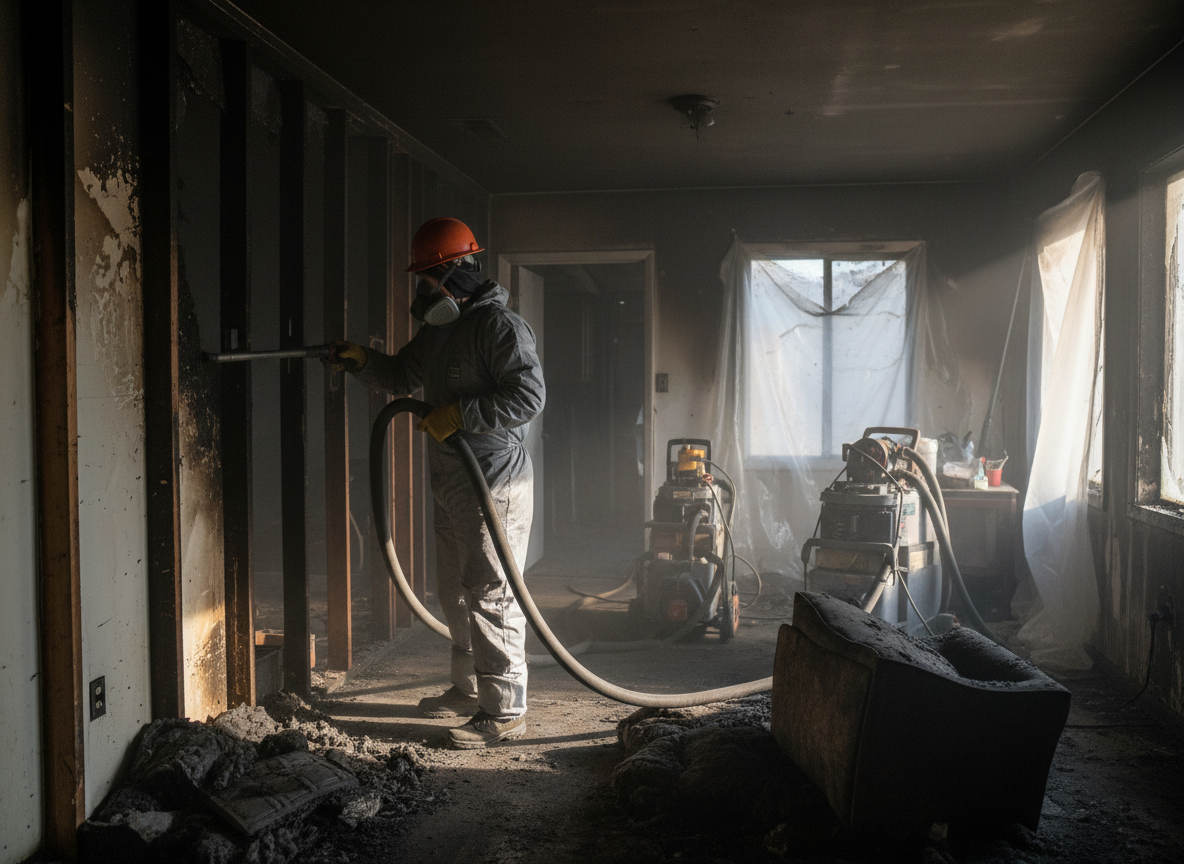
Studio City sits in a Mediterranean climate with warm dry summers that let embers travel far across dry brush and into homes tucked along Laurel Canyon. Older single-family houses from the 1950s and 60s often have lath-and-plaster walls and knob-and-tube wiring that complicate soot removal and require careful disassembly to avoid hidden char damage. Restoration crews must account for the steep grades and narrow roads that limit equipment access when a fire starts near the LA River corridor.
Universal Studios Hollywood sits just south, so many calls involve commercial-adjacent residential properties where smoke travels through shared ventilation. Technicians test for acidic soot on drywall, hardwood and HVAC systems because the dry air keeps residues powdery longer than in humid regions. Los Angeles County building codes require permits for any structural member replacement, and crews coordinate with inspectors before re-framing hillside foundations weakened by heat.
North Hollywood and Sherman Oaks borders bring a mix of mid-century ranch homes and newer infill construction, each needing different cleaning protocols. Residues from modern synthetics bond differently to tile versus original oak floors, so crews use separate HEPA protocols and odor-neutralizing agents matched to each material. Seasonal Santa Ana winds can restart smoldering debris days after the initial event, requiring extended monitoring even after visible cleanup.
Technician insight
In Studio City the thing that catches most people out with fire damage restoration near me is how quickly dry summer air lets soot penetrate old plaster and travel through hillside HVAC runs. Homeowners often try wiping surfaces themselves and drive the acidic residue deeper into the wood. We always pull baseboards on 1960s homes because the gap behind them holds hidden char that later smells when the first Santa Ana wind hits.
Laurel Canyon Smoke Intrusion
A homeowner in Laurel Canyon reported smoke odor two days after a small brush fire near the ridge. We found soot had entered through an attic vent and settled inside the original plaster walls of a 1958 house. After negative-air containment and targeted cleaning of the HVAC trunk line, the odor was eliminated without removing any drywall.
How it works
- 1
Initial Assessment
Technicians arrive within hours, document all affected rooms, test for hidden char in attics and wall cavities, and note access limits created by Laurel Canyon slopes.
- 2
Containment and Safety
Plastic barriers and negative-air machines isolate the work zone to prevent soot migration into unaffected areas of the home.
- 3
Soot and Smoke Removal
HEPA vacuums, dry sponges and specialized cleaners remove residues from plaster, wood and HVAC components while protecting original finishes common in Studio City homes.
- 4
Structural Drying and Monitoring
Industrial dehumidifiers and moisture meters track drywall and framing until readings meet Los Angeles County standards before any reconstruction begins.
- 5
Final Walk-Through
Homeowner and crew inspect every treated surface, verify odor elimination and confirm all debris has been removed from the property.
Pricing
Upfront written quotes provided after inspection; cost driven by square footage affected, material types and access challenges on hillside lots.