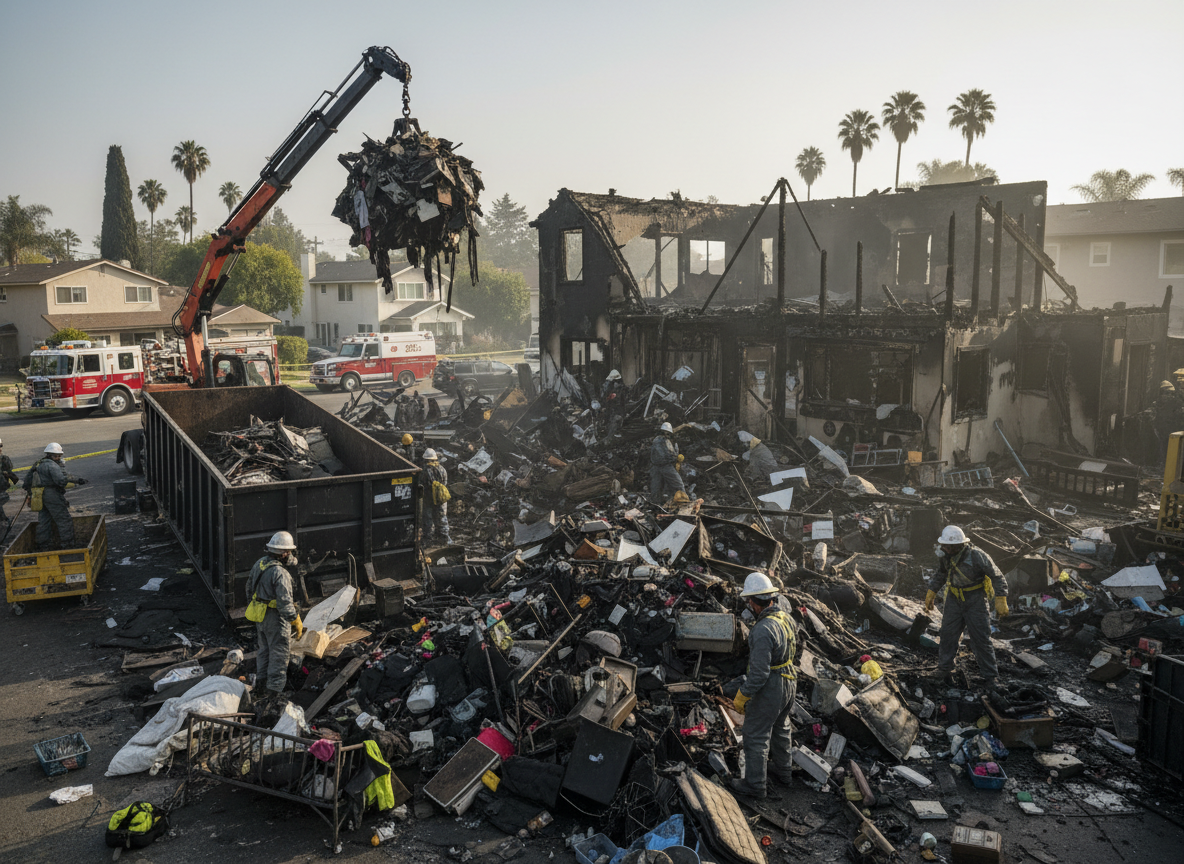
Hoarding cleanup after fire in Studio City often involves mid-century ranch homes built in the 1950s and 1960s along Ventura Boulevard and near the LA River, where accumulated belongings trap soot and ash deep into walls and subfloors. Warm dry summers accelerate smoke penetration through unsealed attics and single-pane windows typical of these properties, requiring crews to separate charred debris from salvageable items while monitoring for hidden embers in dense piles. Los Angeles County regulations on waste disposal add steps for sorting hazardous materials like plastics and electronics before transport to approved facilities.
Access complications arise in Laurel Canyon and hillside streets where narrow driveways and steep terrain limit equipment use, forcing manual removal of water-damaged hoarded items after suppression efforts. Nearby neighborhoods like Sherman Oaks and North Hollywood share similar housing stock, but Studio City's proximity to Universal Studios Hollywood means jobs frequently occur in denser residential pockets with shared walls that allow smoke migration between units. Technicians must test for asbestos in older insulation disturbed by fire crews before full cleanup begins.
Seasonal patterns matter because Mediterranean climate conditions leave properties vulnerable to rapid recontamination from wind-blown ash during Santa Ana events, so sealing and HEPA filtration become priorities once debris is cleared. Crews document every layer removed to satisfy insurance adjusters familiar with Los Angeles County fire claims, avoiding shortcuts that leave odors or staining in hardwood floors common to local builds.
Technician insight
In Studio City, the thing that catches most people out with hoarding cleanup after fire is how the dry summer winds push ash into every crevice of 1950s homes along Laurel Canyon roads, where narrow access forces us to carry debris out by hand instead of using trucks.
Laurel Canyon Home After Electrical Fire
A Studio City homeowner called after an electrical fire spread through stacked newspapers and furniture in a 1962 ranch house. We found smoldering debris blocking hallways and smoke residue embedded in carpet padding over original hardwood. Crews manually removed layers of material down the sloped driveway, then applied odor treatments and sealed the attic. The property passed clearance testing within a week and the owner could reoccupy without lingering smells.
How it works
- 1
Initial Assessment
Technicians inspect the Studio City property to map hoarded zones, identify structural risks from fire damage, and note terrain factors like hillside slopes that affect equipment staging.
- 2
Debris Segregation
Teams separate charred items, hazardous waste, and potentially salvageable materials on-site while following Los Angeles County disposal rules for ash-contaminated debris.
- 3
Deep Cleaning and Odor Removal
HEPA vacuuming, surface treatments, and air scrubbing target smoke residue trapped in layered belongings and older home cavities typical of the area.
- 4
Final Verification
Clearance testing confirms removal of contaminants before returning the space to the owner, with documentation prepared for insurance in Burbank and North Hollywood cases.
Pricing
Costs depend on volume of debris, extent of smoke damage, and site access challenges in hillside Studio City locations.